

Storytelling walk · 3h 30m· Walled City
Gates of Lahore
Thirteen gates and the stories behind them
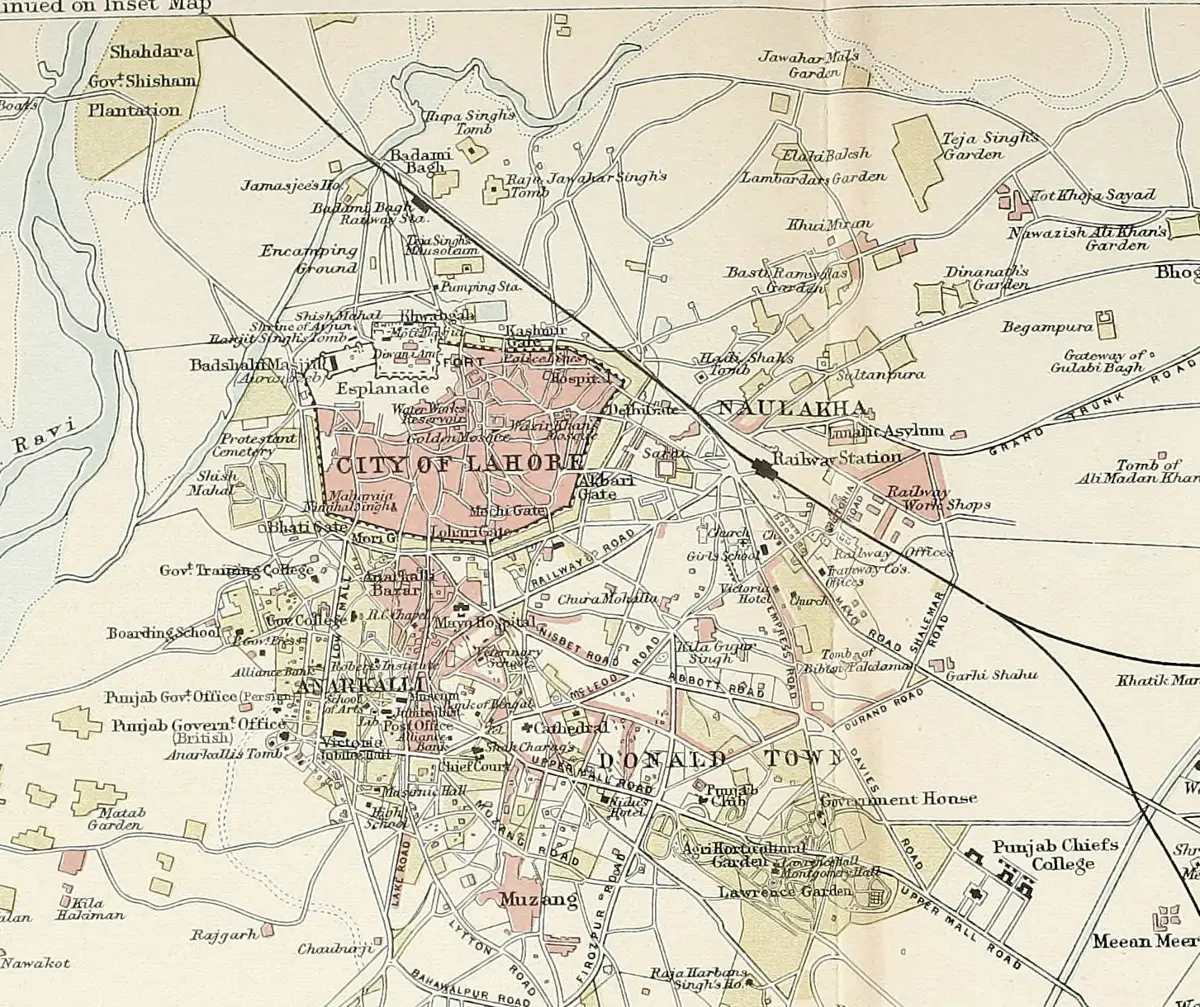
The Walled City once had thirteen gates and a wall you could not see over. We walk the ring of what is left, gate to gate, and tell you who came in through each one.
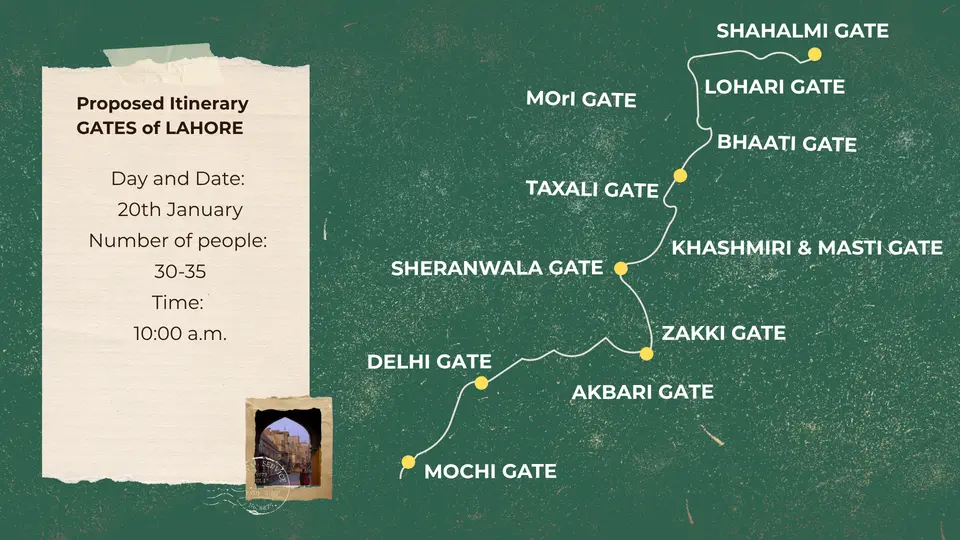
Every Lahori has heard the names. Mochi, Delhi, Akbari, Yakki, Sheranwala, Kashmiri, Masti, Taxali, Bhati, Mori, Lohari, Shahalmi, Roshnai. Fewer people have stood under all of them in a single morning and asked the obvious question: why here, why this name, and what happened to the wall?
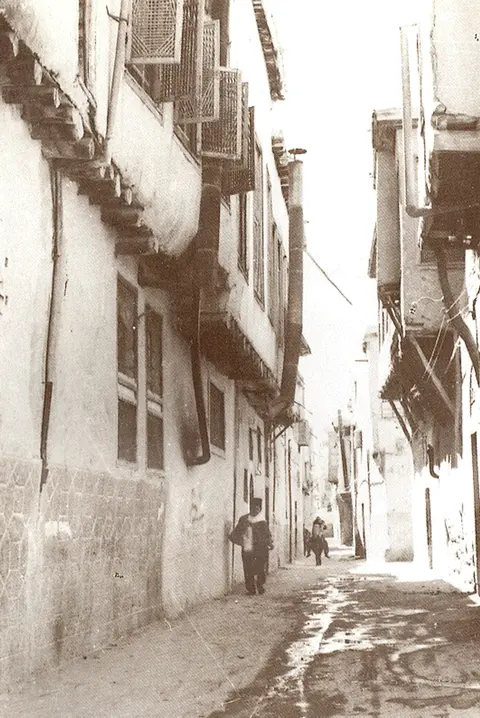
This is our longest city walk and, honestly, our favourite way to introduce someone to the androon shehr. We start at Mochi Gate while the bazaars are still opening, follow the old line of the wall clockwise, and stop at every gate that still stands and every spot where one used to. Along the way you get the Sikh-era gunpowder store, the gate named after a horse, the gate that was rebuilt as a small palace, and the bazaar that burned in 1947 and rebuilt itself in a year.
Halfway we sit down for chai. By the end you will be able to give directions inside the Walled City, which is a party trick nobody expects.
An exploration of
- All thirteen gates, standing or remembered, in one route
- The story of the wall itself: who built it, who pulled it down
- Shahalmi bazaar, the fire of 1947 and what came after
- A chai break in a tea house older than your grandparents
The route
Stop by stop.
- 1
Mochi Gate
Where we meet. Named, most likely, for a Mughal gatekeeper and not for shoemakers.
- 2
Delhi Gate
The grand eastern entrance, rebuilt by the British, restored again in our lifetime.
- 3
Akbari Gate
Akbar's gate and Akbar's market, still the wholesale spice bazaar.
- 4
Yakki Gate
Only the name survives. We tell you about the saint it is named after.
- 5
Sheranwala Gate
The gate of the lions, where Ranjit Singh reportedly kept two of them in cages.
- 6
Kashmiri and Masti Gate
The road to Kashmir, and the gate that faces the Fort.
- 7
Taxali Gate
The old royal mint. Gone, but the neighbourhood is alive.
- 8
Bhati Gate
Poets, wrestlers and Mohammad Rafi's boyhood streets.
- 9
Mori Gate
The smallest opening, once used for taking the dead out of the city.
- 10
Lohari Gate
The ironsmiths' gate and the busiest bazaar entrance today.
- 11
Shahalmi Gate
Named after Aurangzeb's son, remembered for the fire of 1947. We end here.
Included
- ✓A Lahore ka Ravi storyteller for the whole walk
- ✓A chai stop midway (chai is on us)
- ✓Bottled water
- ✓Entry tickets to any sites on the route
Not included
- –Transport to and from the meeting point
- –Personal shopping and extra snacks
- –Gratuities, never expected
Good to know
- Wear comfortable shoes. The galiyan are uneven and we walk slowly, but we do walk.
- Dress modestly. Mosques and shrines ask for covered shoulders and knees, and women will need a dupatta or scarf for the mosque.
- Children are welcome. Under 6 walk free, and prams do not work well in the old city, so bring a carrier.
- Photography is encouraged, except where our host asks you to put the phone away.
- We go ahead in light rain. In a real downpour we move the walk and your booking moves with it.
Dates
Choose your morning.
Tap Book on any date to get your tickets on High Tribe. If a date is full, join the waitlist.
November 2026
December 2026
January 2027
February 2027
Past editions
Previous runs of this walk.
Good to know
Questions before you book.
How do I book a tour?
Bookings are made through our website. Pick a date on the Upcoming walks page and tap Book. We recommend booking in advance, as spots on our walks are limited.
How do I pay?
Tickets are sold through High Tribe, our ticketing partner. Tap Book on any date and you will complete payment there. For private tours, schools and companies, we send payment details directly.
Where do the tours start?
Each route has its own meeting point, which we share with you once your booking is confirmed. Most walks begin in or around the Walled City.
What should I wear and bring?
Comfortable walking shoes are a must, as our routes cover narrow lanes and uneven ground. We also suggest modest clothing, as many sites are places of worship, plus water and a camera.