

Storytelling walk · 3 hours· Walled City
Bhati Gate to Lohari Gate
Poets, painters and the lanes in between
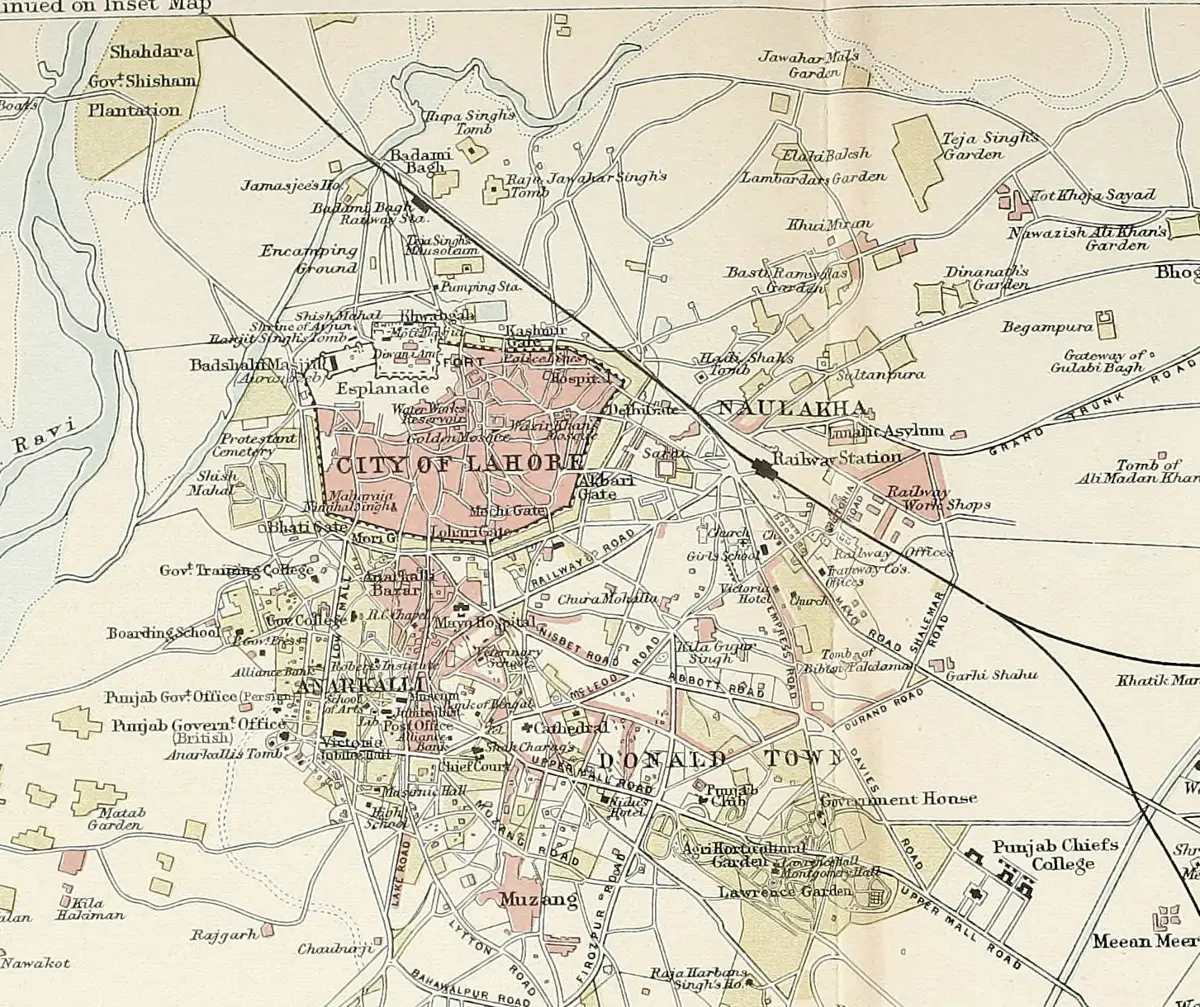
Bhati Gate raised more poets, wrestlers and singers per square metre than anywhere else in Punjab. We walk from Bhati to Lohari through the havelis and koochas where they lived.
Ask an old Lahori where the culture came from and they will point at Bhati Gate. Mohammad Rafi grew up in these lanes. Ustad Daman held court nearby. Painters trained here, wrestlers fought here, and the havelis behind the shop fronts still have the courtyards where all of that happened.
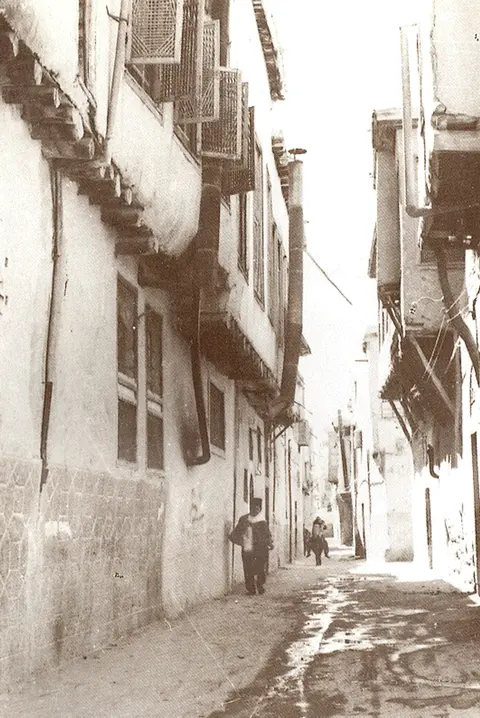
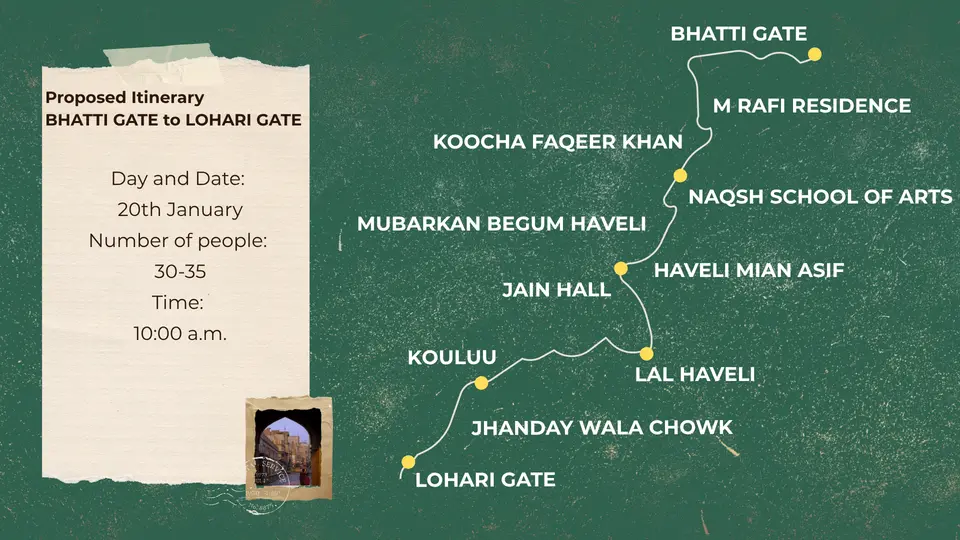
We enter at Bhati and thread our way east through Koocha Faqeer Khan, past the old art school, into Mubarak Begum's haveli and Haveli Mian Asif, and onto Lal Haveli with its painted balconies. Then the lanes tighten, the bazaar noise builds, and we come out at Lohari Gate where the ironsmiths once worked and the cloth merchants now shout.
It is a walk about people more than buildings. Bring questions.
An exploration of
- The neighbourhood that raised Mohammad Rafi
- Koocha Faqeer Khan and the Fakir Khana collection's story
- Mubarak Begum Haveli, Haveli Mian Asif and Lal Haveli
- Lohari Gate's bazaar at full volume
The route
Stop by stop.
- 1
Bhati Gate
The western gate, named for the Bhatti Rajputs.
- 2
Mohammad Rafi's boyhood home
The singer grew up here before Bombay.
- 3
Koocha Faqeer Khan
Home of the Fakir family and their private museum.
- 4
Naqsh School of Arts
Where a generation of miniature painters learned the brush.
- 5
Mubarak Begum Haveli
- 6
Haveli Mian Asif
- 7
Jain Hall
A reminder that this was a city of many faiths.
- 8
Lal Haveli
The red haveli, painted balconies and all.
- 9
Jhanday Wala Chowk
The flag square, a bazaar crossroads.
- 10
Lohari Gate
We end at the ironsmiths' gate.
Included
- ✓A Lahore ka Ravi storyteller for the whole walk
- ✓A chai stop midway (chai is on us)
- ✓Bottled water
- ✓Entry tickets to any sites on the route
Not included
- –Transport to and from the meeting point
- –Personal shopping and extra snacks
- –Gratuities, never expected
Good to know
- Wear comfortable shoes. The galiyan are uneven and we walk slowly, but we do walk.
- Dress modestly. Mosques and shrines ask for covered shoulders and knees, and women will need a dupatta or scarf for the mosque.
- Children are welcome. Under 6 walk free, and prams do not work well in the old city, so bring a carrier.
- Photography is encouraged, except where our host asks you to put the phone away.
- We go ahead in light rain. In a real downpour we move the walk and your booking moves with it.
Dates
Choose your morning.
Tap Book on any date to get your tickets on High Tribe. If a date is full, join the waitlist.
Past editions
Previous runs of this walk.
Good to know
Questions before you book.
How do I book a tour?
Bookings are made through our website. Pick a date on the Upcoming walks page and tap Book. We recommend booking in advance, as spots on our walks are limited.
How do I pay?
Tickets are sold through High Tribe, our ticketing partner. Tap Book on any date and you will complete payment there. For private tours, schools and companies, we send payment details directly.
Where do the tours start?
Each route has its own meeting point, which we share with you once your booking is confirmed. Most walks begin in or around the Walled City.
What should I wear and bring?
Comfortable walking shoes are a must, as our routes cover narrow lanes and uneven ground. We also suggest modest clothing, as many sites are places of worship, plus water and a camera.